
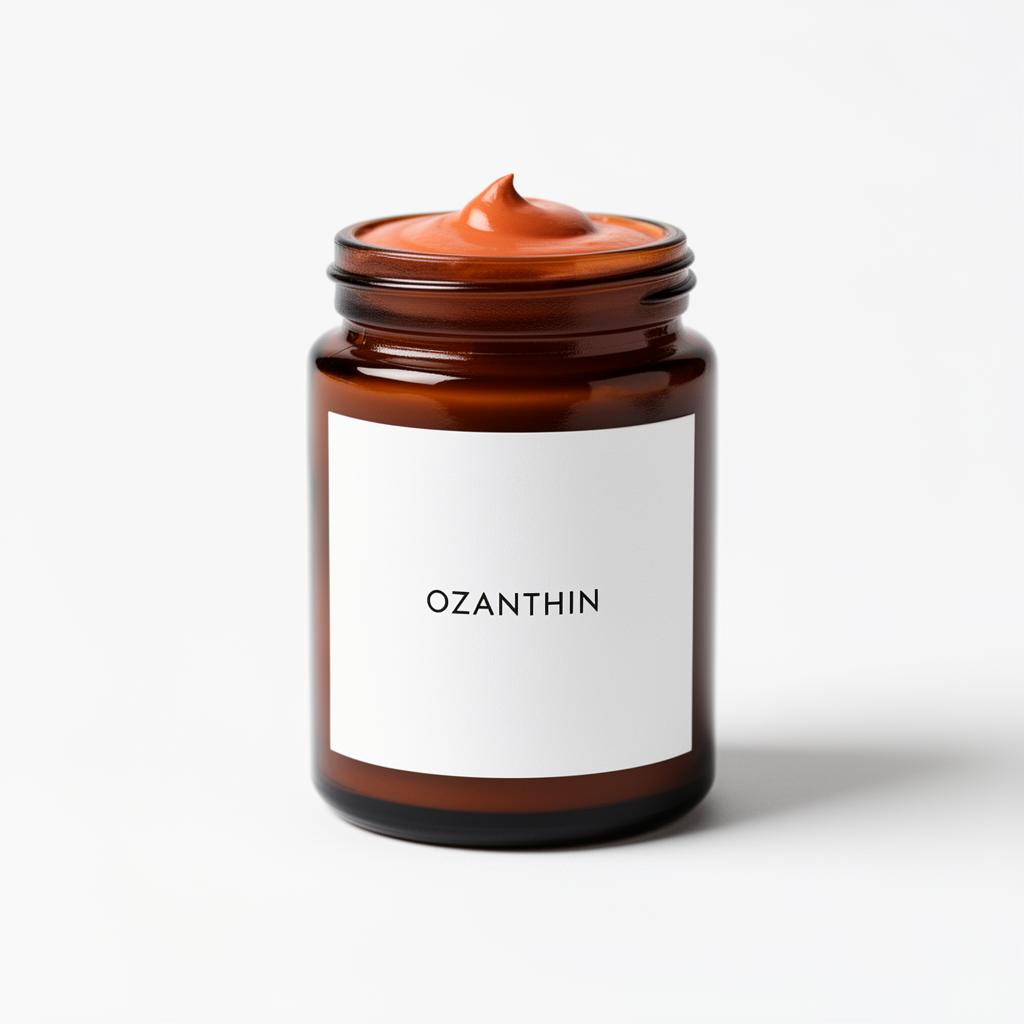
Ozanthin™
ריפוי מבפנים. הגנה מבחוץ.
שני כוחות. משחת ריפוי אחת.
Ozanthin™ משלב שמנים בוטניים עתירי אוזון עם אסטקסנטין - האנטיאוקסידנט החזק ביותר בטבע - כדי לחטא, לחמצן ולשקם עור פצוע באופן כרוני.
פצעים כרוניים כמו כיבי כף רגל סוכרתית ופצעי לחץ לכודים במעגל של זיהום, דלקת ומחסור בחמצן. Ozanthin™ שובר את המעגל באמצעות פורמולה דו-פעולתית: שמנים צמחיים מאוזנים מספקים השפעה אנטי-מיקרוביאלית ומחמצנת מיידית, בעוד אסטקסנטין נכמס מגן על הקולגן מפני נזק ומקדם באופן פעיל היווצרות רקמה חדשה. התוצאה היא משחת טבעית יחידה, יציבה, הפועלת בשתי חזיתות בו-זמנית.
Ozanthin™ נמצא כעת בהערכה קלינית. צרו קשר כדי ללמוד עוד או לברר על זמינות למקרי טיפול חמלה.
מה יש בתוך Ozanthin™
שלושת העמודים
למה השילוב חשוב
כל עמוד פועל באופן עצמאי. יחד הם יוצרים משהו שאף אחד מהם לא יכול להשיג לבדו - סביבת חמצון-חיזור מווסתת במדויק באתר הפצע. השמן המאוזן מחטא ומחמצן; המטריצה הבוטנית מקיימת פעילות אנטי-דלקתית ומשקמת; והאסטקסנטין מבטיח שהפעילות החמצונית של האוזון לעולם לא תהפוך לנזק רקמתי הרסני. האיזון הזה - בין חמצון מבוקר להגנה אנטיאוקסידנטית - הוא ליבת החדשנות של Ozanthin™.
איך Ozanthin™ עובד
 1
1חיטוי
מיני חמצן ריאקטיביים שמקורם באוזון חודרים למצע הפצע, מחסלים חיידקים, ביופילם ופתוגנים במגע - כולל זנים עמידים לאנטיביוטיקה - ומפחיתים ריח והפרשות.
 2
2חמצון והפעלה
אוזונידים משחררים חמצן מבוקר לרקמה היפוקסית, מעודדים הרחבת כלי דם, תגובה חיסונית מקומית ומטבוליזם תאי כדי להניע מחדש את מחזור הריפוי התקוע.
 3
3הגנה ובנייה מחדש
אסטקסנטין מנטרל עקה חמצונית עודפת, מגן על הקולגן הקיים מפני פירוק אנזימטי ומקדם סינתזת קולגן חדש - משקם את גמישות העור ומאיץ גרנולציה ואפיתליזציה מחדש.
“הנוכחות הבו-זמנית של מיני חמצן ריאקטיביים שמקורם באוזון ושל אסטקסנטין יוצרת סביבת חמצון-חיזור מווסתת - מחטאת ומשקמת באותו הזמן, מבלי להפריע זו לזו.”
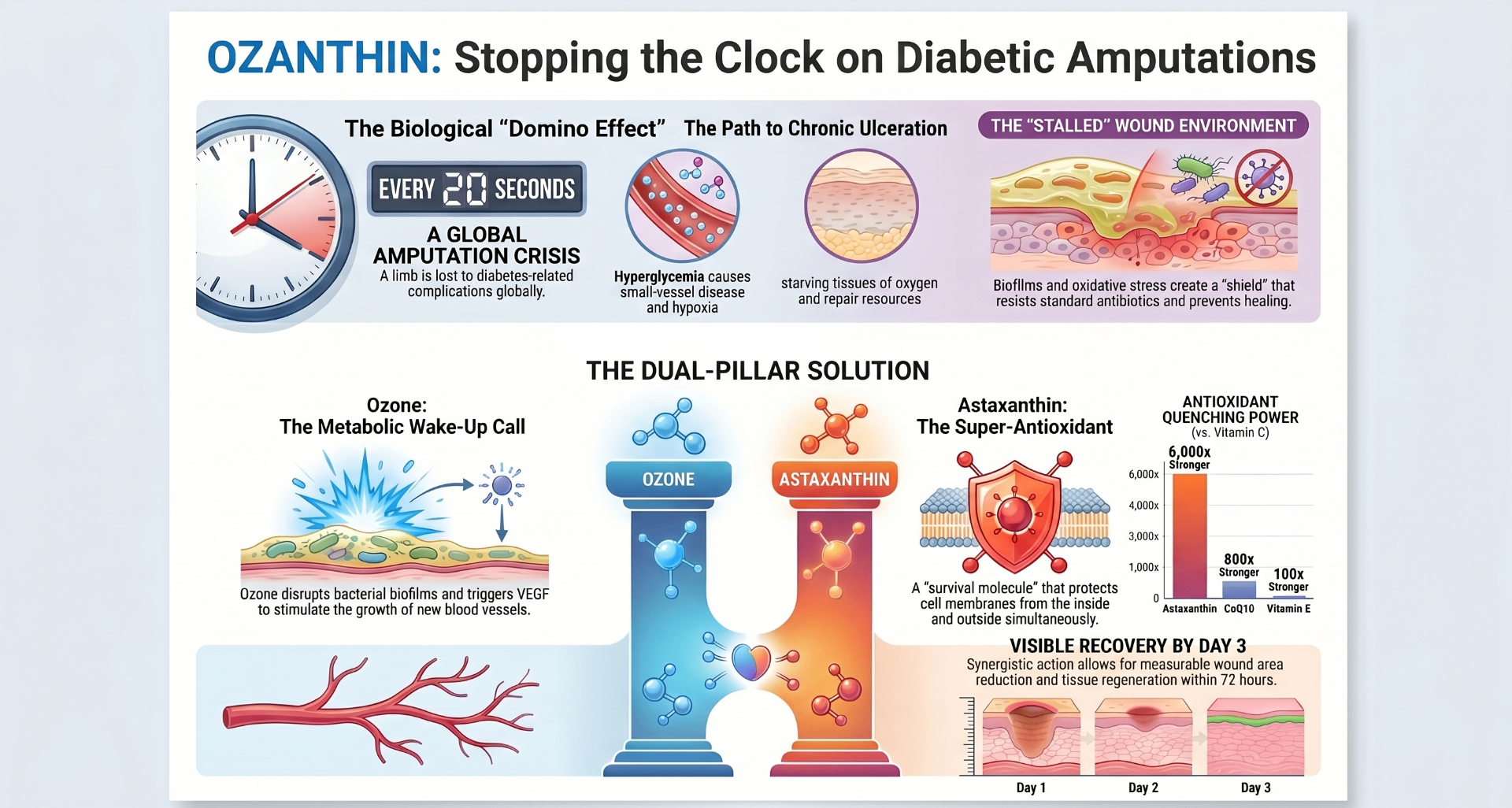
עצירת השעון על קטיעות סוכרתיות
מצגת מדעית מלאה המסבירה את המנגנון המולקולרי של Ozanthin™ בריפוי פצעים כרוניים.
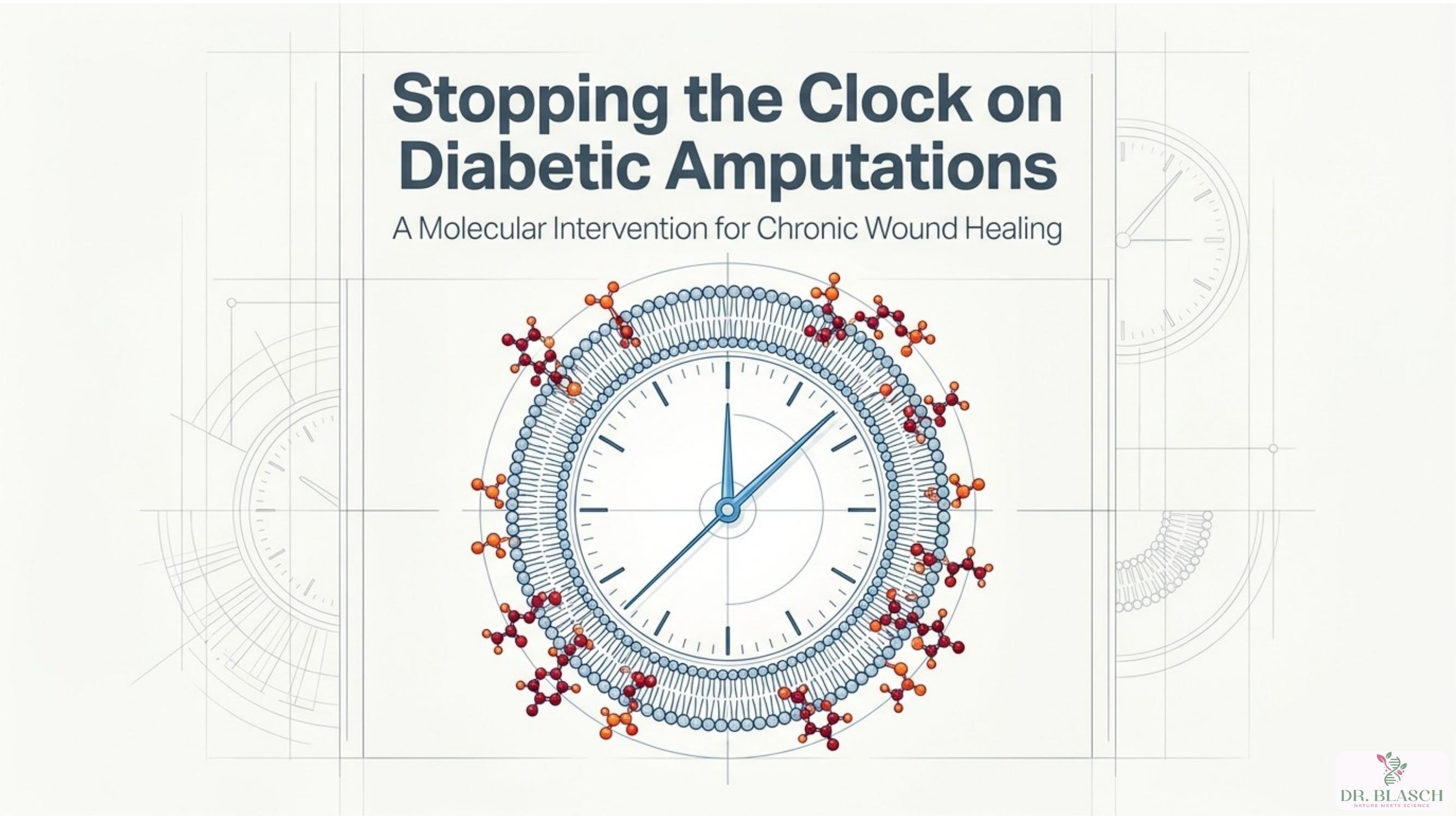
1 / 19 - Stopping the Clock on Diabetic Amputations
Ozanthin™
Ozanthin™ נמצא כעת בהערכה קלינית. צרו קשר כדי ללמוד עוד או לברר על זמינות למקרי טיפול חמלה.
בסיס הראיות המדעי
Ozanthin™ בנוי על בסיס של מדע שנבדק בביקורת עמיתים. הפרסומים הבאים תומכים ברציונל הקליני, בפעילות הרכיבים ובהקשר השוקי של הפורמולה - מאורגנים לפי קטגוריית טענה.
הנטל הגלובלי של פצעים כרוניים וכיבים סוכרתיים
- World Health Organization. (2024). Diabetes Fact Sheet. WHO. https://www.who.int/news-room/fact-sheets/detail/diabetes
- Hossain, M.J., et al. (2024). Diabetes mellitus, the fastest growing global public health concern: Early detection should be focused. Health Science Reports. PubMed Central.
- Armstrong, D.G., Tan, T.W., Boulton, A.J.M., & Bus, S.A. (2023). Diabetic foot ulcers: A review. JAMA, 330(1), 62-75. doi:10.1001/jama.2023.10578
- Beulens, J.W.J., et al. (2021). Prognostic models for predicting the risk of foot ulcer or amputation in people with type 2 diabetes: A systematic review and external validation study. Diabetologia.
- Inazumi, T., et al. (2020). Diabetic foot ulcers: A review.
- McDonald, M., et al. (2021). The microbiology of diabetic foot infections: A meta-analysis. BMC Infectious Diseases.
שמן מאוזן: פעילות אנטי-מיקרוביאלית וריפוי פצעים
- Anzolin, A.P., da Silveira-Kaross, N.L., & Bertol, C.D. (2020). Ozonated oil in wound healing: What has already been proven? Medical Gas Research, 10(1), 54-59.
- Roth, A., Krishnakumar, A., & Rahimi, R. (2023). Ozone as a topical treatment for infected dermal wounds. Frontiers in Bioscience (Elite), 15(2), 9. doi:10.31083/j.fbe1502009
- Ugazio, E., et al. (2020). Ozonated oils as antimicrobial systems in topical applications. Molecules, 25(2), 334.
- Teixeira, J., et al. (2021). Ozonized oils: Review of quality control, stability, and effectiveness in treatment of acne vulgaris.
- Marino, A., et al. (2018). Inactivation of foodborne bacteria biofilms by aqueous and gaseous ozone. Frontiers in Microbiology.
- Ozalp, O., et al. (2019). Evaluation of the short-term efficacy of transdermal ozone therapy in patients with internal derangement of the temporomandibular joint.
- Sadowska, J., et al. (2008). Characterization of ozonated vegetable oils by spectroscopic and chromatographic methods. Chemistry and Physics of Lipids, 151, 85-91.
אסטקסנטין: ריפוי פצעים, קולגן ופעילות אנטי-דלקתית
- Meephansan, J., et al. (2017). Effect of astaxanthin on cutaneous wound healing. Clinical, Cosmetic and Investigational Dermatology, 10, 259-265. doi:10.2147/CCID.S142795
- Chou, H.Y., et al. (2016). Enriched astaxanthin extract from Haematococcus pluvialis augments growth factor secretions to increase cell proliferation and induces MMP1 degradation to enhance collagen production in human dermal fibroblasts. International Journal of Molecular Sciences, 17(6), 955. doi:10.3390/ijms17060955
- Chang, M.X., & Xiong, F. (2020). Astaxanthin and its effects in inflammatory responses and inflammation-associated diseases: Recent advances and future directions. Molecules, 25(22), 5342.
- Bjørklund, G., et al. (2022). The role of astaxanthin as a nutraceutical in health and age-related conditions. Molecules, 27(23), 8604.
- Davinelli, S., Nielsen, M.E., & Scapagnini, G. (2018). Astaxanthin in skin health, repair, and disease: A comprehensive review. Nutrients, 10(4), 522.
- Chalyk, N., et al. (2021). Meta-analysis: Astaxanthin on skin ageing markers. Nutrients, 13(9), 2917.
- Tominaga, K., et al. (2012). Cosmetic benefits of astaxanthin on human subjects. Acta Biochimica Polonica, 59(1).
ביולוגיית קולגן ונזק חמצוני
- Monboisse, J.C., & Borel, J.P. (1992). Oxidative damage to collagen. In Free Radicals and Aging (pp. 323-327). Birkhäuser Basel.
- Hawkins, C.L., & Davies, M.J. (1997). Oxidative damage to collagen and related substrates by metal ion/hydrogen peroxide systems. Biochimica et Biophysica Acta, 1360(1), 84-96.
- Rittié, L., & Fisher, G.J. (2002). UV-light-induced signal cascades and skin aging. Ageing Research Reviews, 1(4), 705-720.
מטריצת שמנים בוטנית: פעילות אנטי-דלקתית ומשקמת עור
- Lin, T.K., Zhong, L., & Santiago, J. (2017). Anti-inflammatory and skin barrier repair effects of topical application of some plant oils. International Journal of Molecular Sciences, 19(1), 70.
- Gorzynik-Debicka, M., et al. (2018). Potential health benefits of olive oil and plant polyphenols. International Journal of Molecular Sciences, 19(3), 686.
- Gupta, M., et al. (2019). Grape seed extract: Having potential health benefits. Journal of Food Science and Technology. doi:10.1007/s13197-019-04113-w
- Gore, D.D., et al. (2024). Wound-healing effect of topical nanoemulsion-loaded cream and gel formulations of Hippophae rhamnoides L. fruit oil. Indian Journal of Pharmacology, 56(2), 120-128.
- Givol, O., et al. (2019). A systematic review of Calendula officinalis extract for wound healing. Wound Repair and Regeneration. doi:10.1111/wrr.12737
- Boroushaki, M.T., Mollazadeh, H., & Afshari, A.R. (2016). Pomegranate seed oil: A comprehensive review on its therapeutic effects. International Journal of Pharmaceutical Sciences and Research.